Stealth UGC vs Native UGC: Why Hidden Ads Backfire
Stealth UGC hides the paid relationship to game the feed. Native UGC looks organic and still discloses. Here's why that matters before Q4.

There's a playbook going around US growth circles. Spin up secondary accounts. Build creator pages that look like real people. Run paid creative that passes as organic and never says who paid for it. The logic sounds clever: the feed rewards content that doesn't look like an ad, so make ads that don't admit they're ads.
That's stealth UGC. And it keeps getting confused with something that looks identical on screen but works in a completely different way: native UGC.
One hides the paid relationship. The other just stops looking like a TV spot. This post breaks down the difference, why stealth UGC is a bad bet on risk alone, and what to run instead heading into Q4.
In short: Stealth UGC is paid creator content that hides the commercial relationship, usually behind secondary or fake accounts. It conflicts with US, EU and Spanish disclosure rules and breaks Meta's and TikTok's policies. It doesn't even buy you performance, because the platforms' own data shows disclosure doesn't hurt results. The better play is native UGC: creator-style creative, licensed and labeled, running on your brand account or as Partnership Ads.
Native UGC vs stealth UGC: the definitions
Native UGC is creative made the way creators make content: a hook in the first second, a real face, handheld framing, a voice that sounds like a person and not a script. It still discloses. It runs from the brand's account, as a Partnership Ad, or from a creator handle the brand has permission to advertise with.
Stealth UGC is paid creative built to avoid disclosure. It lives on throwaway or "secondary" accounts, or it's posted as if a random customer made it, so the viewer never learns that money changed hands.
| Native UGC | Stealth UGC | |
|---|---|---|
| Look and feel | Creator-style, lo-fi, hook-first | Creator-style, lo-fi, hook-first |
| Where it runs | Brand account, Partnership Ads, whitelisted creator handle | Secondary, throwaway or fake "customer" accounts |
| Disclosure | Platform label plus a clear ad disclosure | None, or buried |
| Rights to run as paid media | Licensed in the deal | Usually unclear |
| If it gets exposed | Nothing happens. It was never hidden | The story becomes "they faked it" |

Photo: Jordan McQueen / Unsplash
The look is identical. The accountability isn't. In other words, you can get every performance benefit of native-looking creative without taking on the risk of stealth UGC.
Why stealth UGC is a bad bet (this is about risk, not morals)
1. Regulators are moving from guidance to enforcement
Hiding a paid relationship now carries real penalties on both sides of the Atlantic, and regulators are actively checking.
United States. The FTC's Consumer Reviews and Testimonials Rule has been in force since October 2024, and it lets courts impose civil penalties for knowing violations. In December 2025 the FTC sent its first warning letters under the rule to 10 companies, citing penalties of up to $53,088 per violation. The rule also targets fake indicators of social media influence, and its definition covers accounts that aren't associated with a real individual. The FTC is explicit that ad agencies and marketing firms can be liable too, not only brands. Undisclosed brand relationships are a separate problem on top of that, under the FTC Act and the FTC's Endorsement Guides.
European Union. The European Commission and consumer authorities from 22 member states, Norway and Iceland screened 576 influencers, with results published in 2024. 97% had posted commercial content. However, only 20% consistently disclosed it as advertising, and 62% were flagged for further investigation. Regulators are counting.
Spain. Real Decreto 444/2024 put the largest creators under the supervision of the CNMC. On top of that, an updated influencer advertising code of conduct from Autocontrol, the AEA and IAB Spain took effect on October 1, 2025. More than 4,000 advertisers, agencies, platforms and influencers have signed on. Under the new version, consumers, associations and authorities can all file complaints with Autocontrol's advertising jury.
A stealth UGC operation isn't a gray area in any of these markets. It's the exact behavior the rules were written for.
2. The platforms already require disclosure
Meta and TikTok both require a visible label on paid creator content. Specifically, Meta's Branded Content Policies require creators who are paid or compensated to promote a business to disclose it with the Paid Partnership label, and undisclosed branded content can be taken down. TikTok requires creators to turn on its commercial content disclosure setting whenever they promote a brand, product or service.
Stealth UGC is designed to route around these tools. As a result, more than a single post is at risk. It puts the accounts, and the ad history attached to them, on the line.
3. Disclosure isn't the performance killer it's made out to be
Labeled content doesn't underperform, and that kills the whole premise of stealth UGC. Here's what the platforms' own numbers show:
- TikTok compared nearly 2 million videos with and without proper branded content disclosure (a 2023 study in Indonesia and Pakistan) and found no difference in how they were recommended.
- Meta reports that adding Partnership Ads, which carry the paid partnership label, to campaigns delivers on average 19% lower CPA and 13% higher click-through rates.
Photo: Luke Chesser / Unsplash
The takeaway: the label isn't what hurts performance. Weak hooks and tired creative are. Those are fixable without hiding anything.
4. Audiences punish the reveal, not the deal
Consumers don't mind brand deals. What they punish is a hidden one. The Influencer Trust Index 2025 from BBB National Programs' National Advertising Division surveyed more than 3,700 US consumers. Two findings matter here. First, 70% said partnering with a brand doesn't make an influencer less trustworthy. Second, 70% said they'd feel negative toward an influencer if they found out a paid or gifted promotion wasn't disclosed, and 37% said they'd feel deceived.
In practice, people don't mind seeing an ad. They mind finding out you hid one. Meanwhile, deinfluencing content has turned "this ad pretended to be a real review" into a genre of its own. A network of stealth accounts is raw material for the next callout video.
5. Finance can't audit what it can't see
Stealth UGC spend can't survive a CFO review, and CFOs are paying closer attention to creator budgets. At IAB's first Creatorfronts in September 2026, IAB's James Douglas told Digiday that some IAB board members still don't know how much they're actually spending on creator marketing. In his view, clearer standards are what will bring more CFOs on board.
Now picture defending a budget line for ghost profiles in that meeting. Stealth UGC spend is hard to attribute, hard to audit and impossible to defend if it leaks.
6. Stealth UGC burns CAC and brand at the same time
Getting caught costs you twice: once in reach and once in trust. When a stealth operation is exposed, the damage doesn't stay inside a few posts. Accounts get taken down, so the creative stops running. Customers who converted start wondering what else was staged. The next campaign starts with a trust deficit you buy back with extra spend. That's CAC going up for reasons no dashboard will show you.
What buyers want: native UGC that stealth UGC can't deliver
Ask anyone running paid social budgets and the request is consistent. They want creative that feels native to the feed. They also want clear rights to run it as an ad, at scale, for as long as it works.
At the same Creatorfronts event, the CMO of Ultra Pouches described creators as having become the creative production house for many of the brand's paid channels. That's the job. Not one lucky organic post on a secondary account, but a steady supply of ad-ready creative.
What scales is a refresh pack: several hooks, several creators and several cuts of the same idea. Every piece is licensed and ready to drop into Partnership Ads or the brand account when the current winner fatigues. That's why stealth UGC can't compete here: nothing about it is built to be reused, scaled or defended.
Native doesn't mean hidden. It means the creative earns attention on its own.
A checklist to keep stealth UGC out of your next brief
- Decide where the asset will run before you brief it: brand account, Partnership Ads or a whitelisted creator handle.
- Put paid usage rights and duration in the deal, not in a follow-up email.
- Use the platform label and a clear disclosure. The FTC notes that built-in disclosure tools aren't automatically enough on their own, and a text disclosure in a video has to be something viewers actually notice.
- Brief the hook, not the script. Rigid briefs kill the native feel you're paying for.
- Plan versions, not a hero video: three to five hooks per concept.
- Keep a clean record of who made what and what they were paid. When finance asks, the answer should take a minute.
Where CreatorPlace fits
CreatorPlace runs on Pay per Delivery: you pay when an asset clears your brief. Before anything reaches your team, AI QA checks four things: audio, 9:16 format, duration and brief compliance. What lands in your review queue is ad-ready creative from real creators, with rights and disclosure built into the deal instead of patched on later. No secondary-account theater.
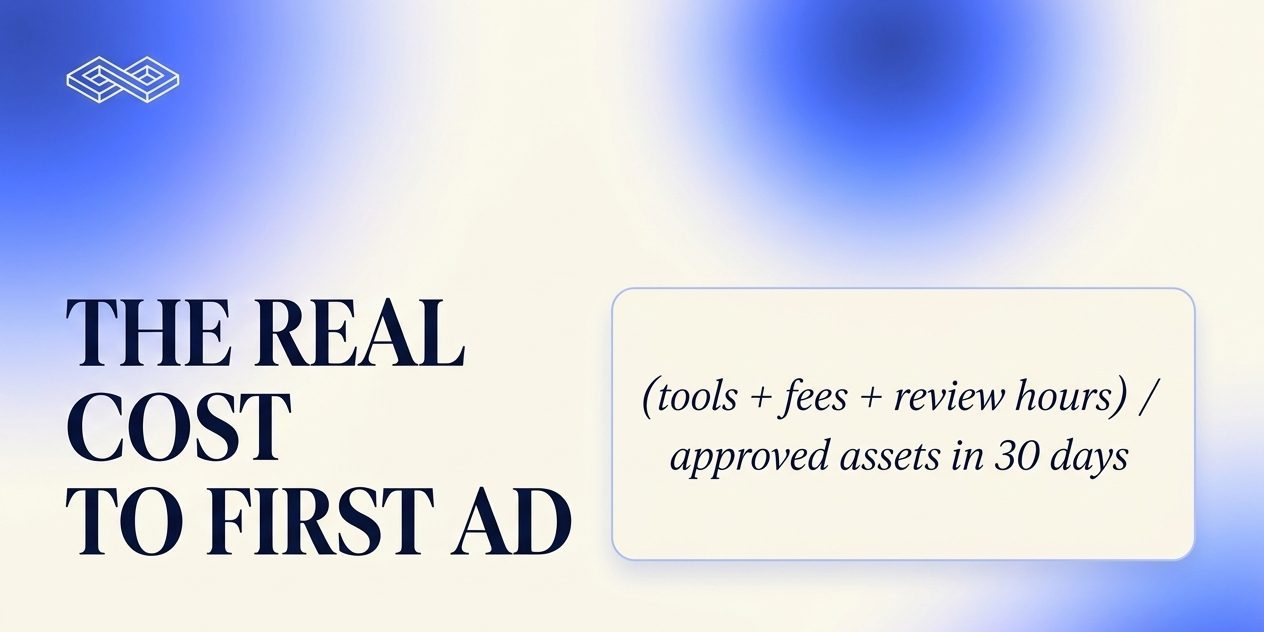
If you want to run the numbers first, our cost-to-first-ad framework compares delivery-based pricing with fixed platform fees.
Before Black Friday and Buen Fin: run a sprint, not a farm
Black Friday lands on November 27 this year, and Mexico's Buen Fin runs November 13 to 17. If you need creative volume for Q4, the play is a fixed sprint of ad-ready videos from real creators, running on your brand account or as Partnership Ads. Ten videos is a solid starting point for hook testing. That beats a farm of ghost profiles that can vanish the week you need them most.
Plan your Q4 sprint. Brief real creators and pay only for approved, ad-ready videos.
Frequently asked questions
What is stealth UGC? Paid, creator-style content designed to hide the commercial relationship, usually posted from secondary or fake accounts so it passes as organic content from a real customer.
What's the difference between native UGC and stealth UGC? They can look exactly the same. Native UGC discloses the paid relationship and runs from the brand, as a Partnership Ad or from a creator who licensed it. Stealth UGC hides the relationship.
Is stealth UGC illegal? It depends on the market and the specifics, and this isn't legal advice. But hiding a paid relationship conflicts with the FTC's endorsement rules in the US, with EU consumer law and with Spain's influencer rules, and it breaks Meta's and TikTok's disclosure policies everywhere.
Does disclosing a paid partnership hurt ad performance? The platforms' own data says no. TikTok found no difference in recommendations across nearly 2 million videos, and Meta reports lower CPA and higher CTR when campaigns add Partnership Ads.
Can I run creator content from my brand account without the creator's handle? Yes, if you licensed it for paid use. It then runs as your ad, which is transparent by definition. What you shouldn't do is present it as an independent customer's opinion.
Tomas Ameri
CTO @CreatorPlace