Deinfluencing Is a Warning Sign for Bad UGC Briefs
Deinfluencing content keeps calling out brands for fake storytime ads. Here's why scripted UGC backfires and what actually earns trust in 2026.

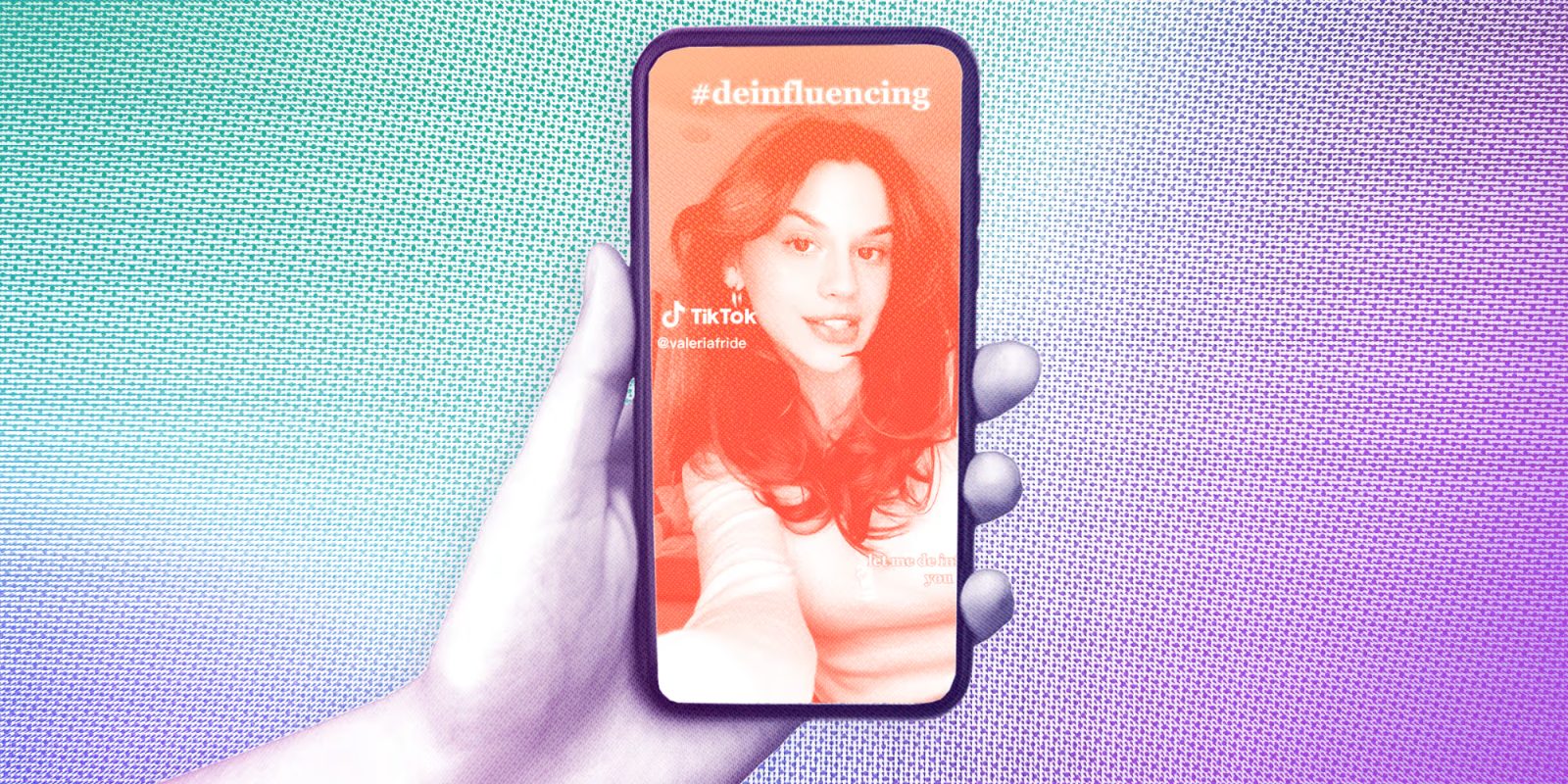
Open TikTok right now and you will find a familiar shape: someone starts a video with a personal story, a bad boss, a toxic mother-in-law, a breakup, a "you won't believe what happened to me." Thirty seconds in, a product shows up. No #ad tag. No disclosure. Just a story that turns out to be a pitch.
Audiences have caught on. Scroll the comments under one of these and you will usually find people calling it out, tagging the brand, and telling each other to report it. That reaction has a name now: deinfluencing.
What deinfluencing actually is
Deinfluencing started in 2023 as a backlash to fawning, too-good-to-be-true product reviews, most visibly after a beauty influencer was accused of wearing false lashes while promoting a mascara. Creators began doing the opposite of a haul: telling followers what not to buy, and why.
The trend has since broadened. It is not just about talking a product down anymore. It is about calling out the format itself, content that pretends to be a personal story or an honest opinion when it is actually paid, scripted, and built to sell.
The scale is worth pausing on. The #deinfluencing hashtag had racked up more than 76 million views on TikTok within weeks of taking off (TODAY.com), climbed past 430 million by early April (comScore), and had surpassed 16 billion by that November (La Nación). That is not a niche backlash. It is a mainstream audience habit now, and it shows no sign of fading.
The storytime ad problem
The clearest version of this is what one internet culture newsletter has documented as "storytime ads": fictional skits, a bad boss, a wild coincidence, a dramatic reveal, that exist purely to set up a product mention. They are not disclosed as ads. They are not even true. The creator is not a customer describing a real experience; they are performing one.
That is not a gray area under US advertising rules. FTC guidance is specific here: endorsements and testimonials have to reflect the honest experience of the person giving them, and a paid performer cannot present themselves as a genuine customer even if the content technically includes some disclosure. Some of these videos have racked up tens of millions of views before community fact-checking labels caught up and flagged them as undisclosed advertising.
This is the exact pattern behind deinfluencing's staying power. It is not audiences rejecting UGC. It is audiences rejecting UGC that lies to them.

Why this backfires for brands
A scripted, fictional anecdote might test well internally. It rarely survives contact with an audience that has spent years learning to spot a paid mention mid-sentence. When it gets caught, the brand does not just lose that one piece of content, it inherits the backlash in the comments, the screenshots, and the "brands are doing this now" discourse that follows.
The irony is that the format exists because real UGC works so well. Authentic content already outperforms polished brand advertising on trust and conversion. Manufacturing a fake version of authenticity does not borrow that advantage, it burns it, both for the brand and for the wider category of creator content.
What the data says actually works
Gen Z in particular has grown up decoding ads in real time, and that skepticism now extends to anything that feels engineered rather than lived. Consumers consistently rank peer content and real customer experiences as more credible than brand-produced or AI-polished creative, and that credibility gap shows up directly in conversion and engagement numbers. The audience is not anti-marketing. It is anti-performance dressed up as sincerity.

What to do instead
- Brief for a real experience, not a script. Give the creator the product and the key message, not a written scene with dialogue and a twist.
- Let the creator keep their voice. The value of UGC is that it does not sound like an ad. A tightly controlled script defeats the purpose.
- Disclose clearly. A visible #ad or #sponsored tag costs almost nothing and removes the single biggest risk in this entire format.
- Test for believability, not just performance. If a script would embarrass the creator to say out loud as their own story, it will read as fake to everyone else too.
- Treat comments as a signal. If an audience is flagging a piece of content as fake or undisclosed, that is not noise to ignore, it is the deinfluencing dynamic playing out on your own campaign.
Get started
If you run marketing for a brand or agency and want UGC that survives contact with a skeptical audience, CreatorPlace connects you with creators who bring their own voice to a brief, not a script to perform.
FAQ
Is deinfluencing the same as anti-UGC sentiment? No. Deinfluencing targets dishonest or overhyped content, not UGC itself. Authentic UGC is exactly what deinfluencing audiences say they want more of. It is also worth keeping in mind what a Wharton marketing professor pointed out early on: a deinfluencer is still an influencer, using the same format and often the same reach to build an audience. The shift is in tone and disclosure, not in the underlying mechanics.
Are storytime ads illegal? In the US, FTC rules require endorsements to reflect a person's honest experience. A scripted skit presented as a real story, without clear disclosure, can violate those rules regardless of how it is labeled.
How do I know if a UGC brief is too scripted? If the creator could not comfortably say the lines as their own genuine opinion, the brief is too scripted. Give direction, not dialogue.
Does disclosure hurt performance? No. Clearly disclosed UGC still outperforms traditional ads on trust and conversion. What hurts performance is getting caught hiding the disclosure, not including it.
Tomas Ameri
CTO @CreatorPlace